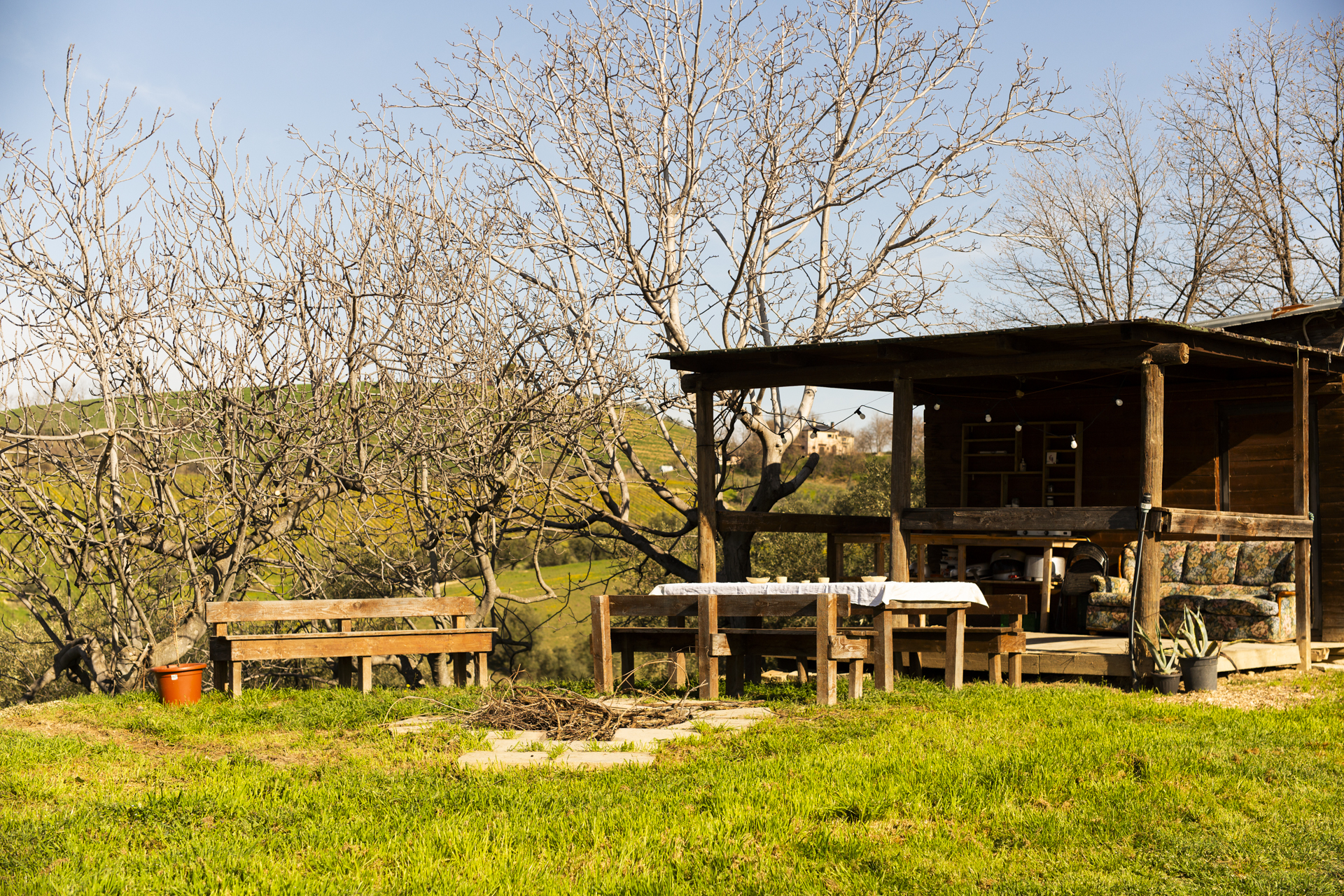
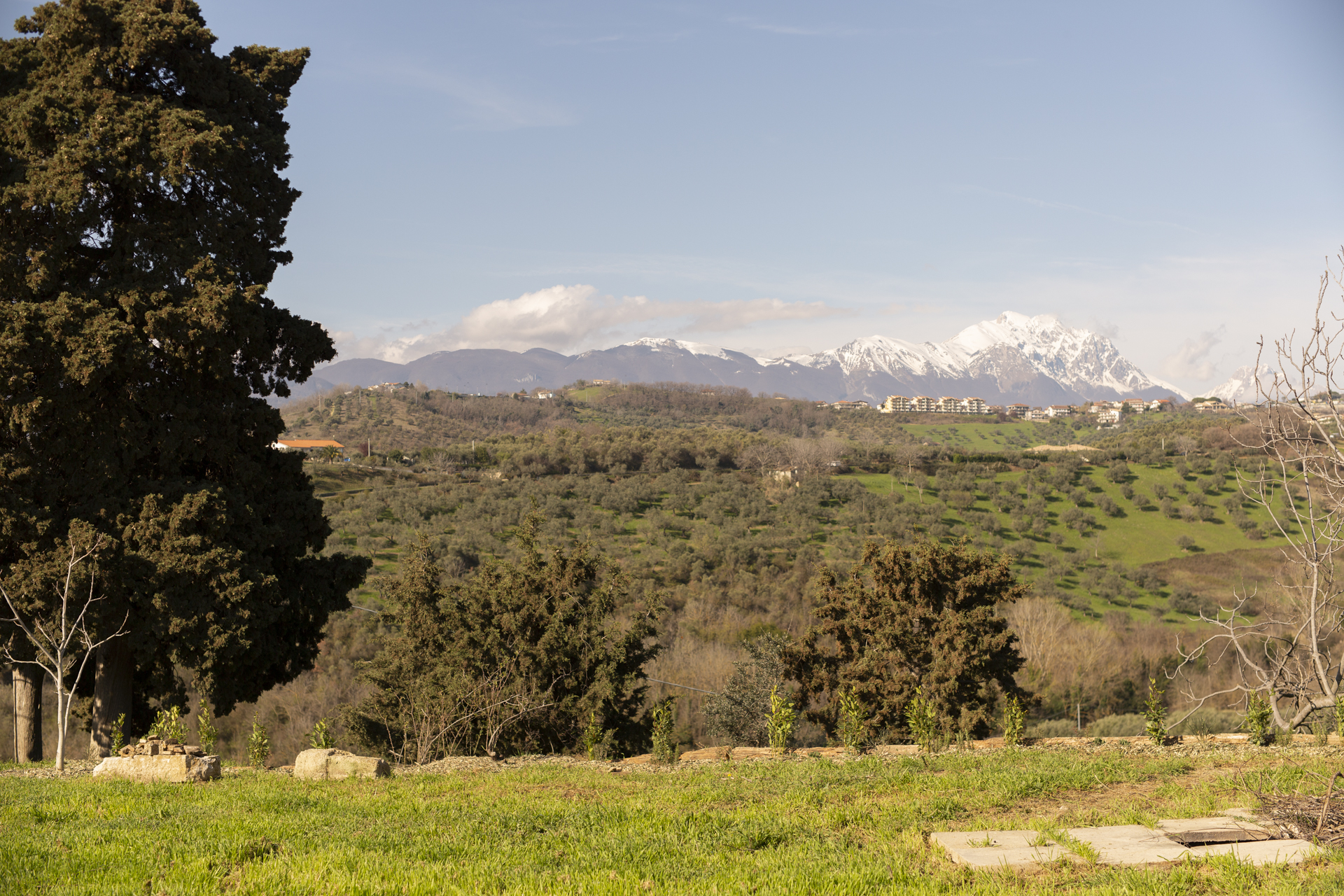
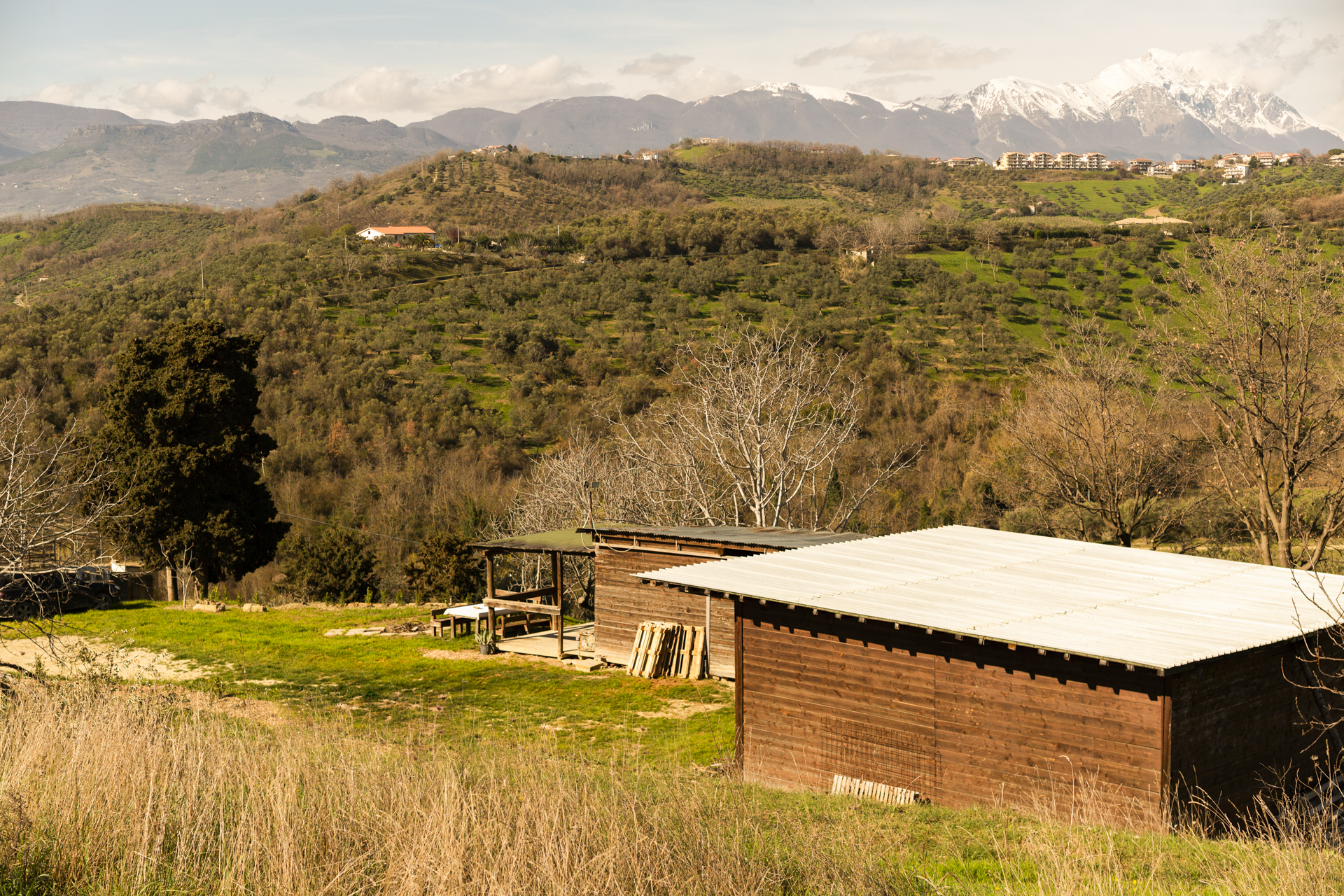
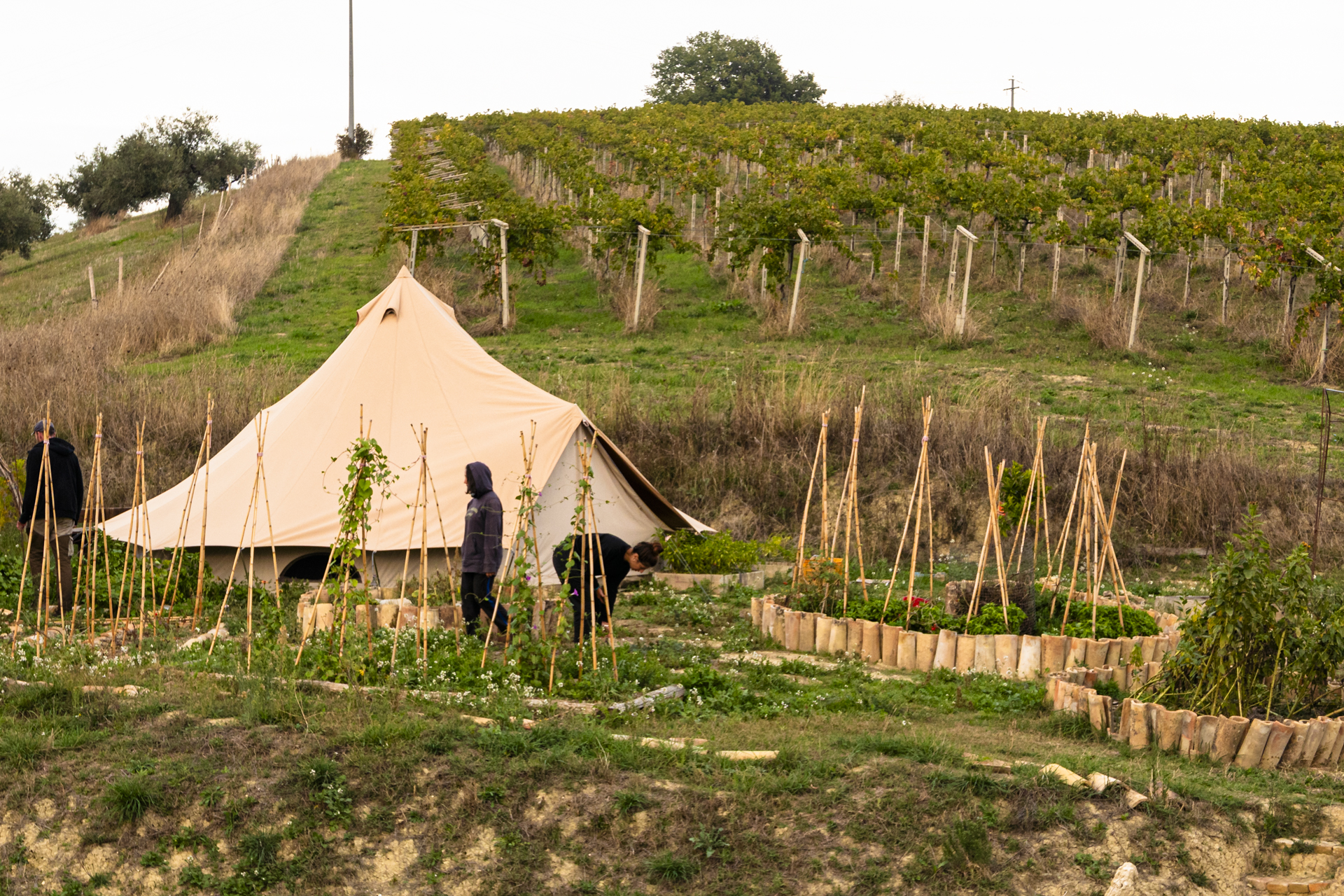
Sentieri di Sogni hosts artist and researcher residencies that explore the intersection of rural regeneration, ecological care, and creative practice. Our residencies offer time and space for deep work in a landscape shaped by tradition, agriculture, and collective imagination.
Residents work alongside our farming practices, engage with local communities, and participate in the rhythms of rural life. The program is designed to support projects that address themes of ecology, cultural heritage, food sovereignty, craft traditions, and the future of rural landscapes.
Each residency is tailored to the needs of the artist or researcher, with access to studio space, accommodation, and the surrounding landscape. We encourage experimental approaches that challenge conventional boundaries between art, research, agriculture, and community practice.
Residencies typically run between two weeks and three months, with opportunities for public presentations, workshops, or exhibitions. We welcome applications from artists, writers, researchers, designers, and practitioners working across disciplines who share our commitment to ecological and cultural regeneration.
Residency projects
Building as Communal Process
March–April 2026, August–September 2026
Over a series of residencies, the project seeks to re-establish the process of building as a communal activity, and a dialogue between residents, local craftspeople, and international participants in a collective construction process. Based on an analysis of the site, climate conditions, and long-term uses, the design emerged through dialogue and practical experimentation.
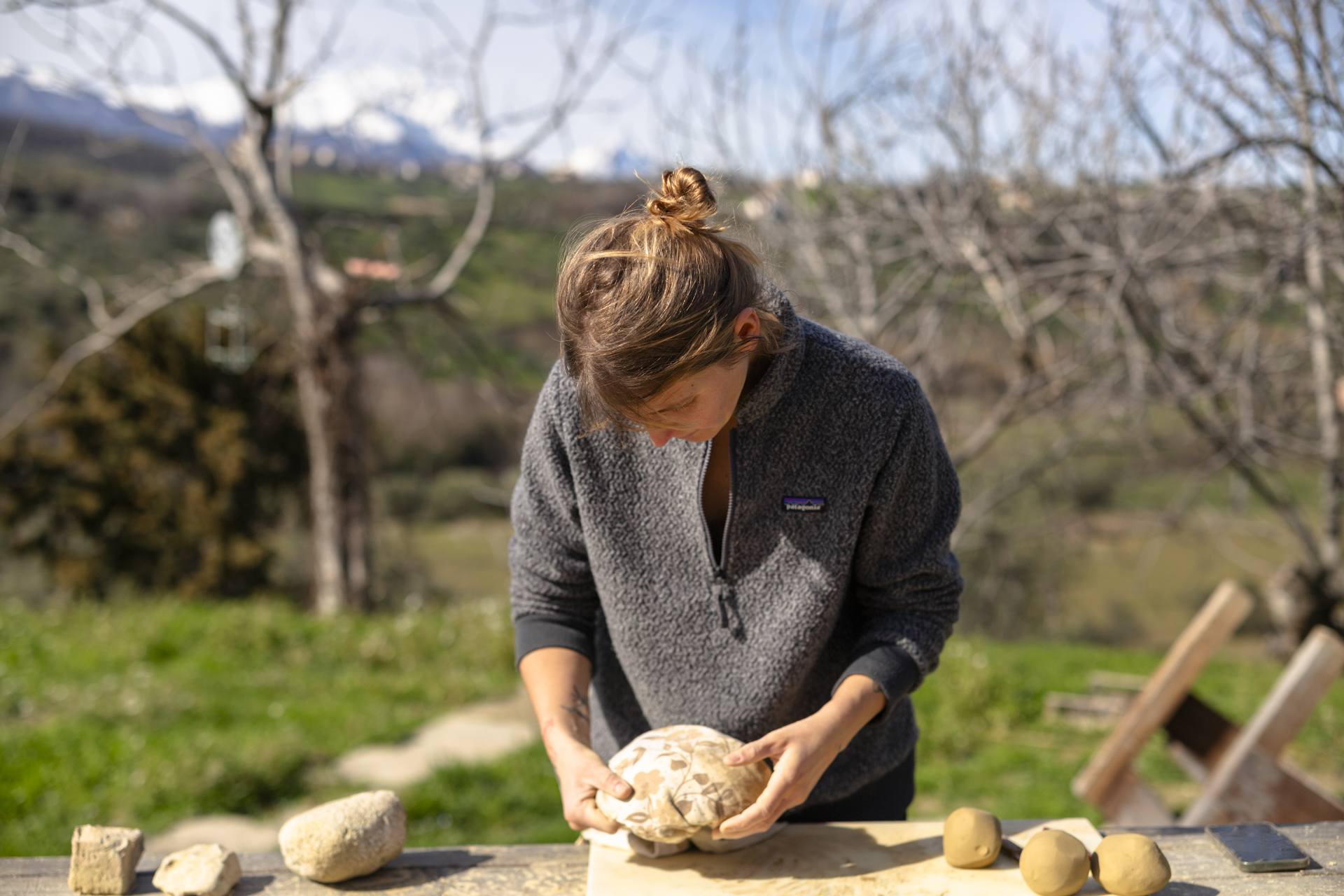
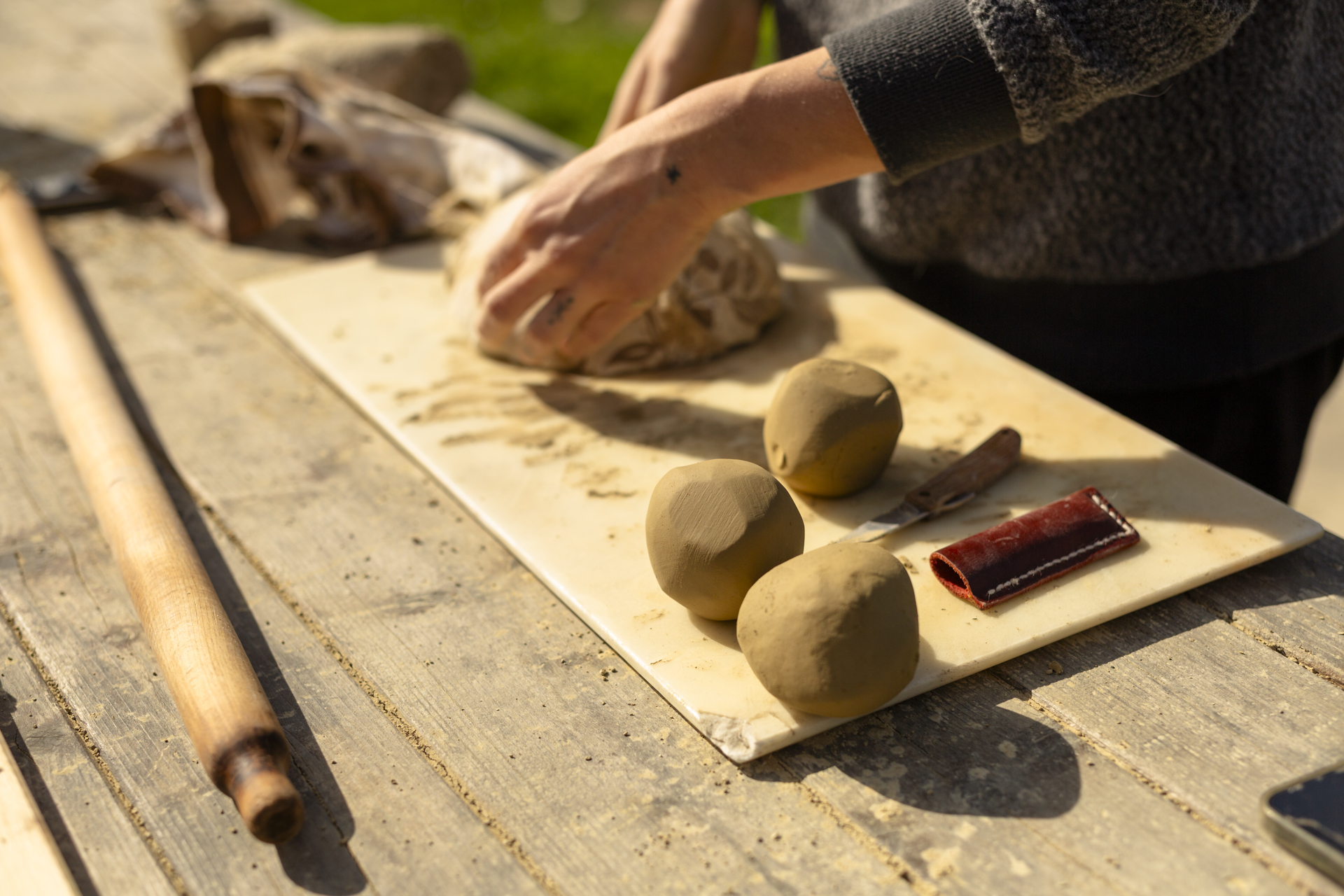
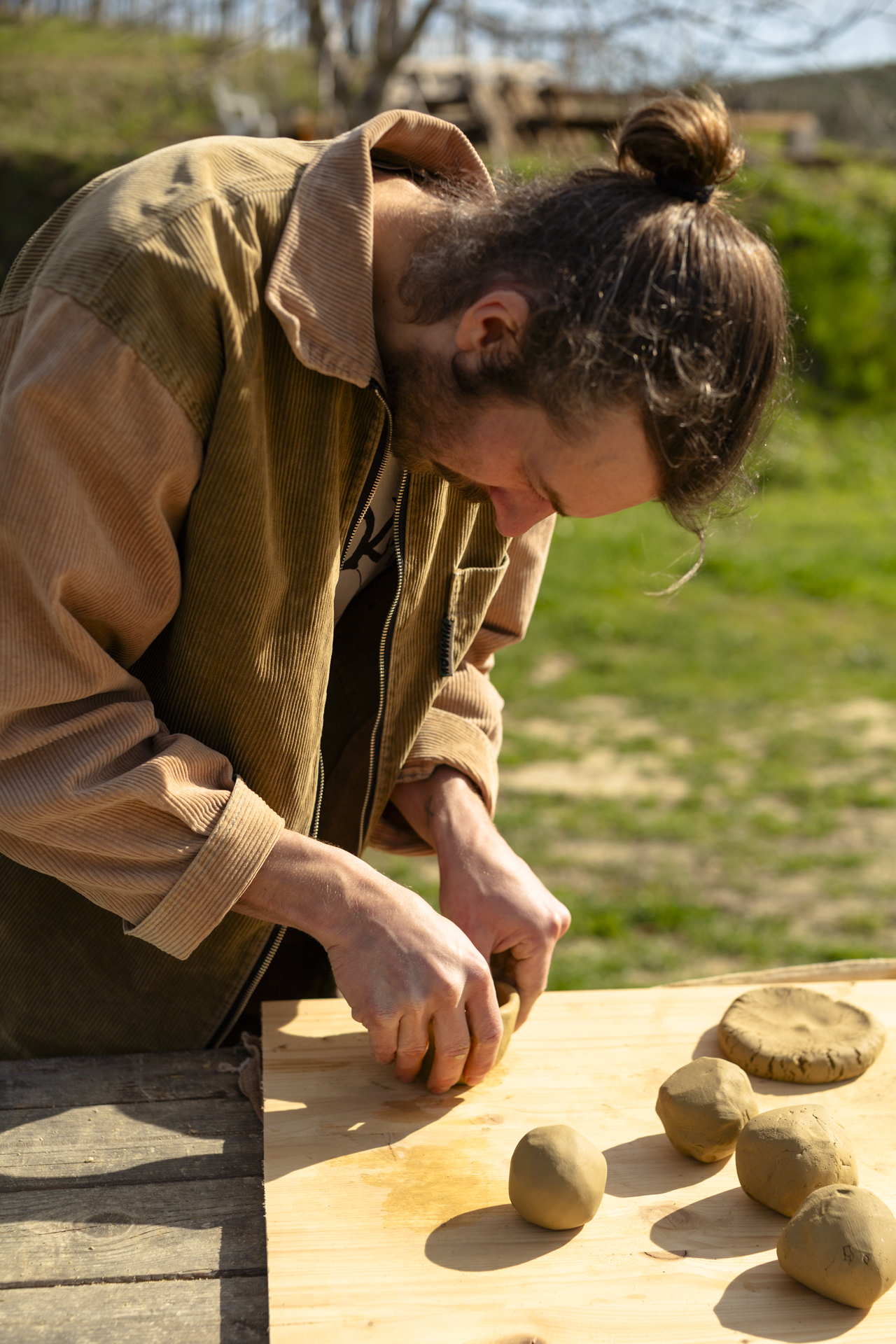
Practice-based research will focus on local materials such as clay and stone, testing and documenting different mixtures and techniques. The construction process will unfold through a series of workshops and residencies that combine professional expertise with collective learning. By reviving traditional forms of communal building, the project investigates sustainable and low-cost approaches to architecture. At the same time, it explores how spaces built collectively can foster care, responsibility, and a deeper sense of belonging to a place.
Ecological Alleys for Biodiversity
February 2026
During a month-long residency at Sentieri, ecologist and arborist Tobias Winkels designed and planted a living corridor dividing the frutteto from the neighbouring field. More than 600 locally adapted trees, shrubs, and herbaceous plants were introduced to create a layered habitat within the cultivated landscape.
Over time, the alley will shelter insects, birds, and pollinators while improving soil health and microclimate. As it grows, it becomes both ecological infrastructure and a long-term experiment in biodiversity regeneration, a living element of the farm that future residents will observe, study, and build upon.
Infrastructure Comunale – Leštnice Collective
April 2025
In 2025, Sentieri hosted the Czech collective Leštnice for a residency exploring social architecture and communal infrastructure in a rural context. Through discussions, shared work, and walking the land as a research method, participants studied the spatial relationships between the farmhouse, fields, water sources, and the wider territory. The residency explored how agricultural spaces and existing buildings could gradually evolve into infrastructure for gatherings and residencies while maintaining their farming function.
Walking the tratturi – Habitat Broadcast
April–May 2027
'Walking the tratturi' is part of Habitat Broadcast, a three-year programme developed with Leštnice for the Budweis (ECoC) project exploring rural territories as sites of cultural exchange. At Sentieri, residents engage with the surrounding agricultural landscape through walking, research, and conversations with local farmers and residents, contributing stories and reflections from the territory. These materials are shared through collaborative radio broadcasts produced from the Maringotka 2.0, a small mobile structure that functions as a temporary radio station and gathering space, creating a versatile community hub that can be set up in rural environments where such spaces are often missing.
Previous Residents
Marius Houschyar
Music and Graphic Design
Athens, GR
Anna Hokešová
Sound Designer and Musician
Prague, CZ
Hanne Jannasch
Visual Artist
Vienna, AT
Jasper Riehm
Living Architecture and Chef
Amsterdam, NL
Gabriela Soikova
Multispecies Designer
Pilsen, CZ
Anouk Van Wijk
Visual Artist
Amsterdam, NL
Marta Pagliuca Pelacani
PhD Researcher, University College Cork
Pescara, IT
Rebecca Douglas
MA Artistic Research
Newcastle, UK
Richard Weaver
Digital Artist
Birmingham, UK
Paul Philips
Residency Space Coordinator
Byron Bay, AU
Iulia Ionesi
MA Artistic Research
Amsterdam, NL
Harry Reddick
Sound Artist
Bristol, UK
Claire Wymer
Visual Artist
Como, IT
Maria Isidora Vincentelli
Dancer
Athens, GR
Nikolas Prokop
Multidisciplinary Artist
Prague, CZ
Barbara Gabová
Food and Visual Art
Prague, CZ
Max Jardine
Permaculture Design
Melbourne, AU
Tobias Winkels
Arboriculture and Ecology
Prague, CZ
Dennis Nientimp
PhD Environmental & Social Psychology
Groningen, NL
Emma Bareman
Art Therapist
Groningen, NL
Oscar Ström
Creative Technologist
Stockholm, SE
Nima Emami
Visual Artist
Dresden, DE