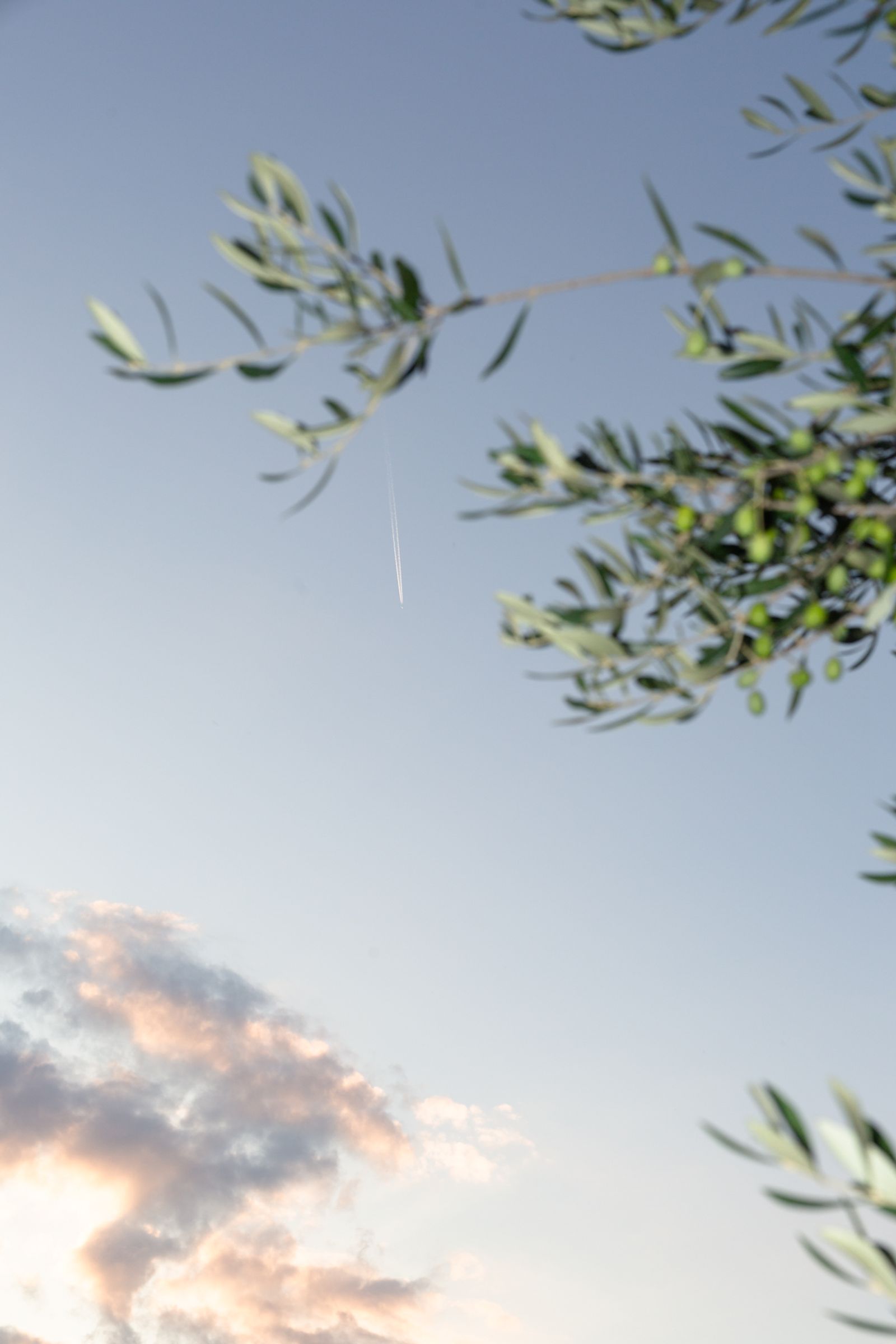
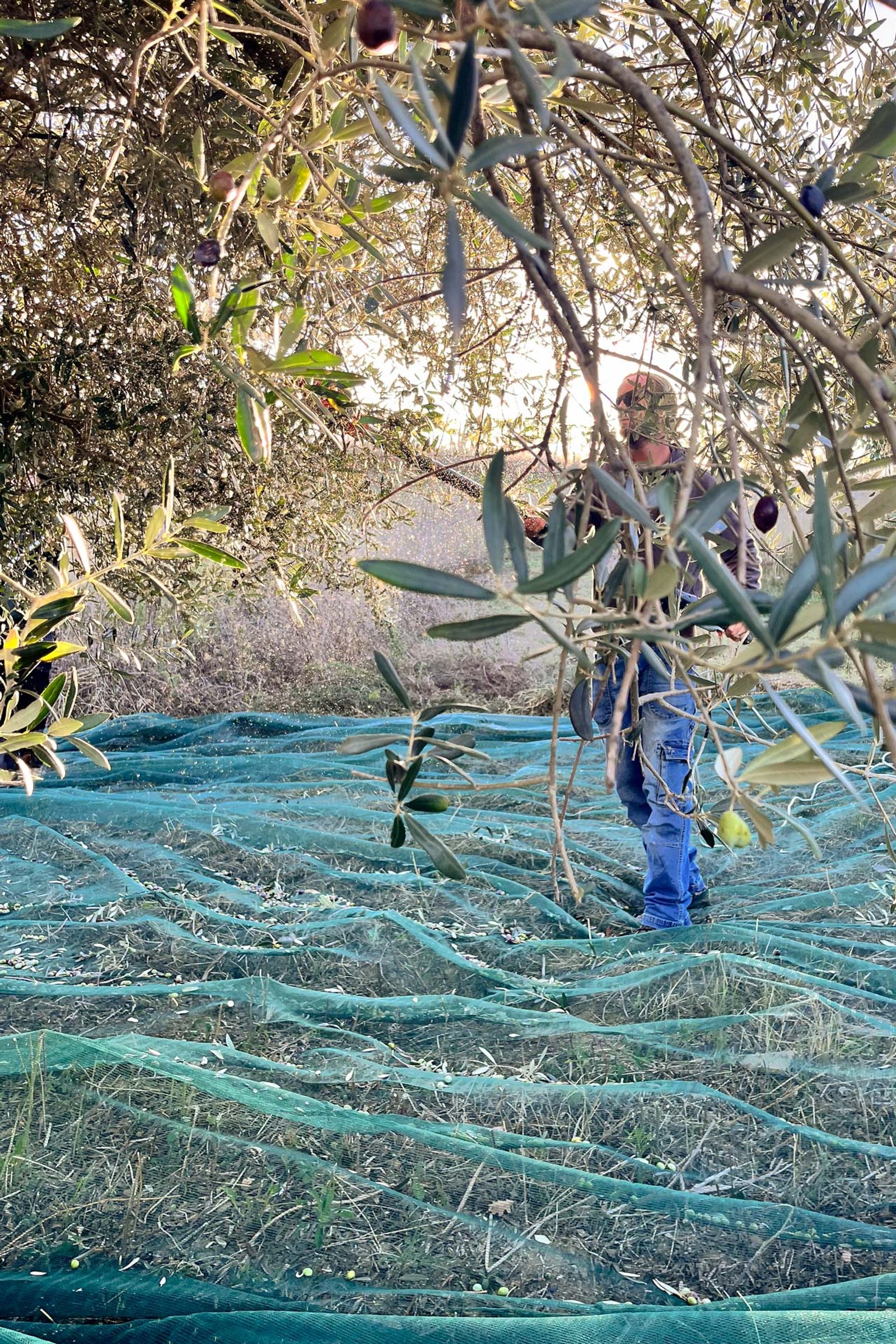
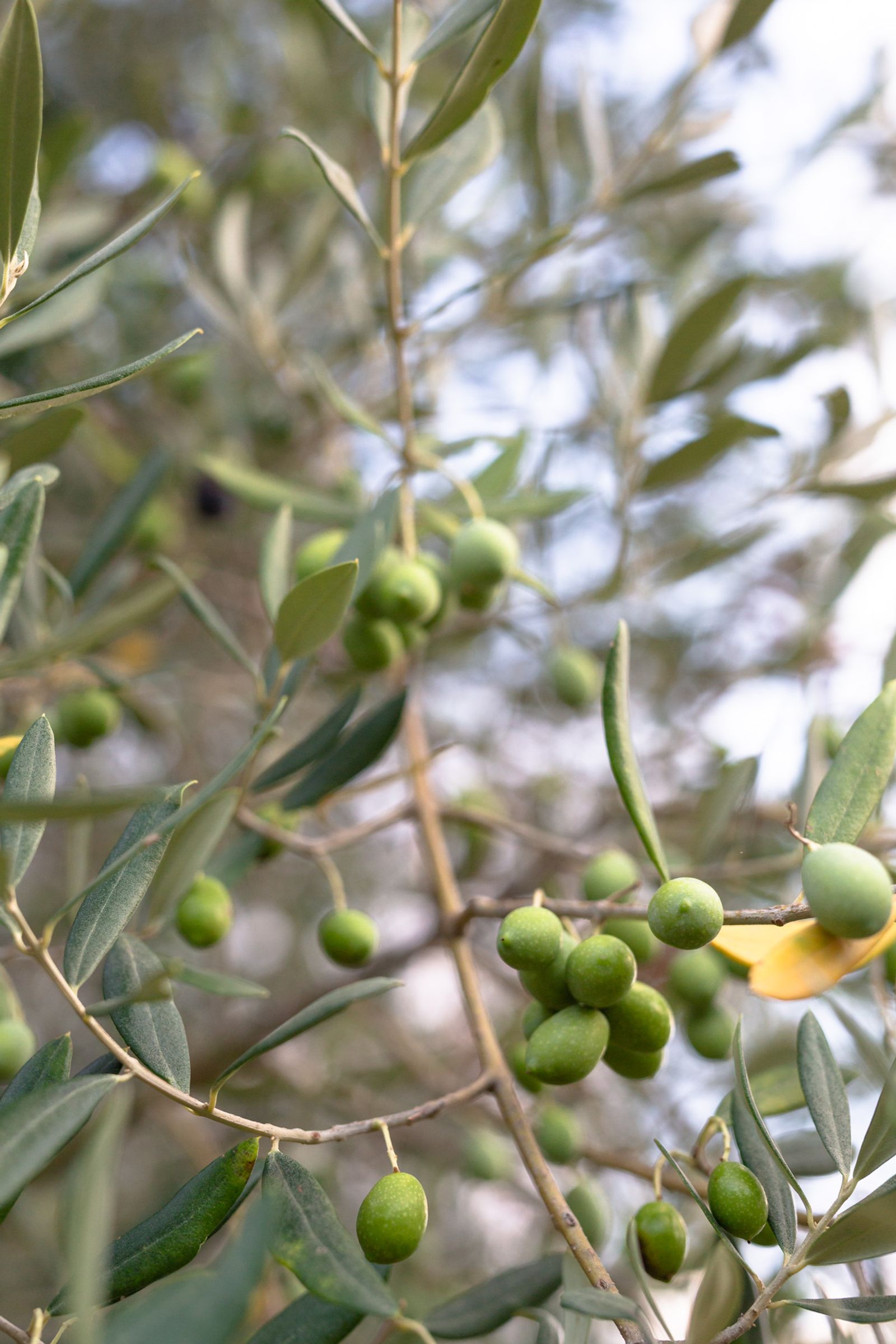
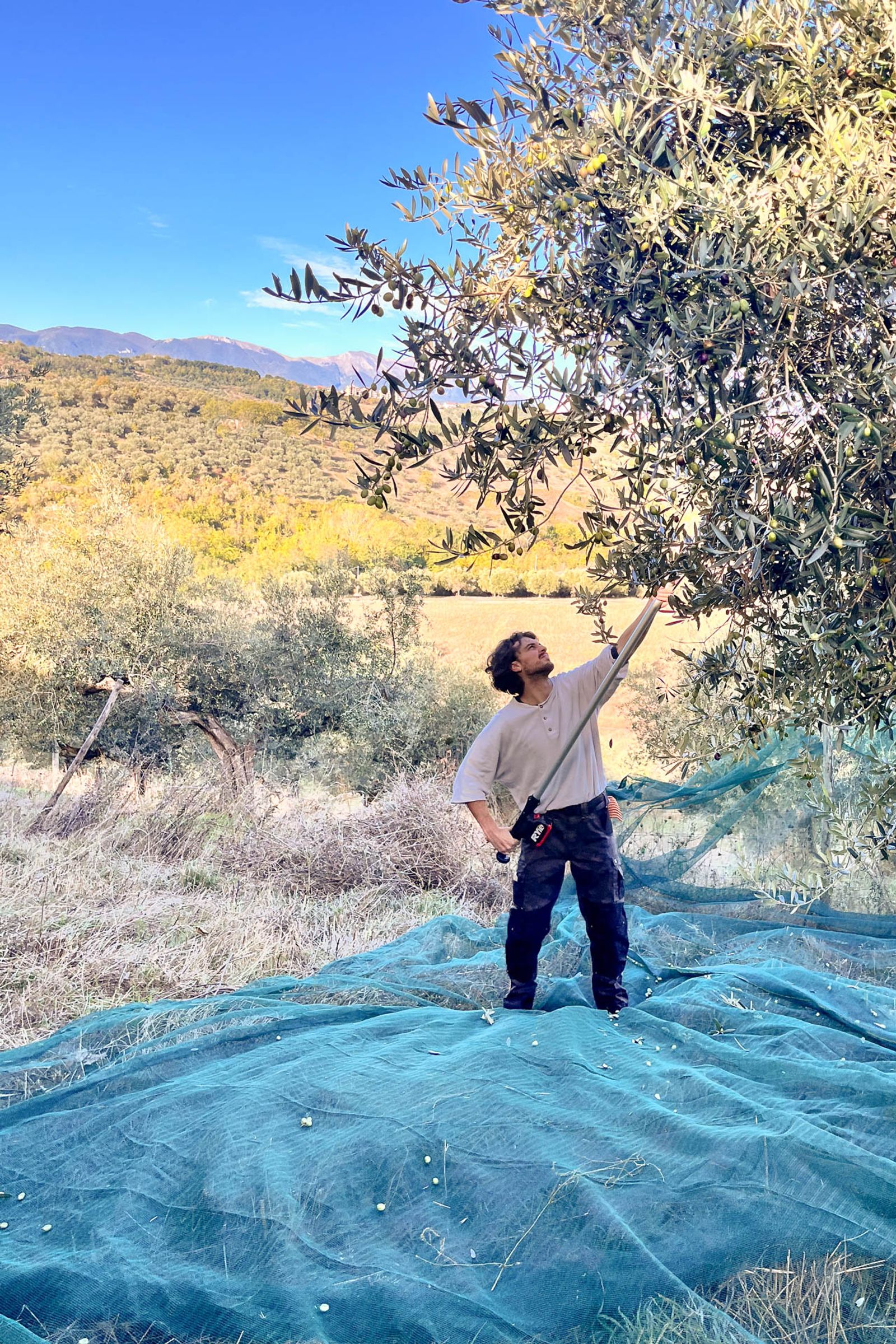
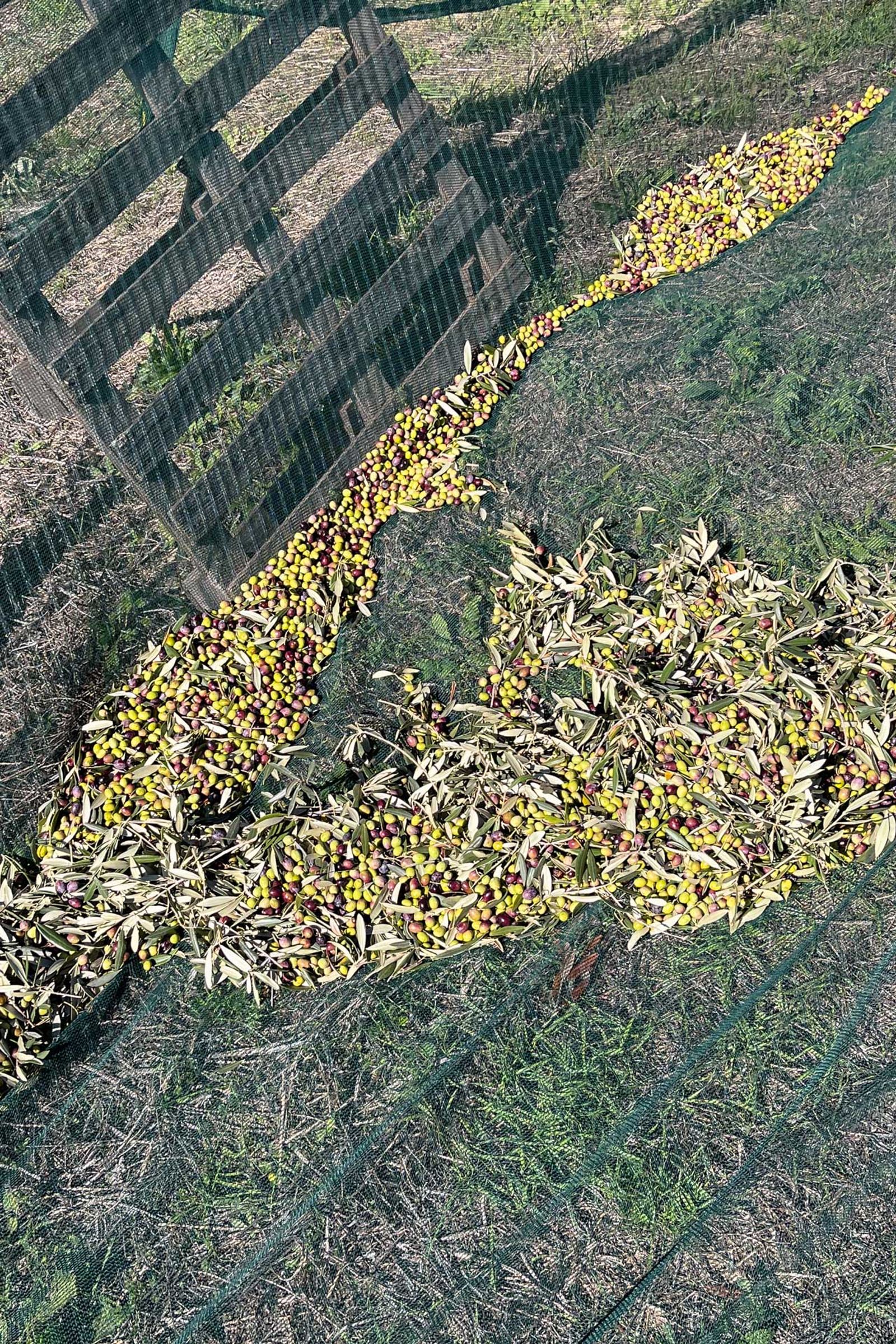
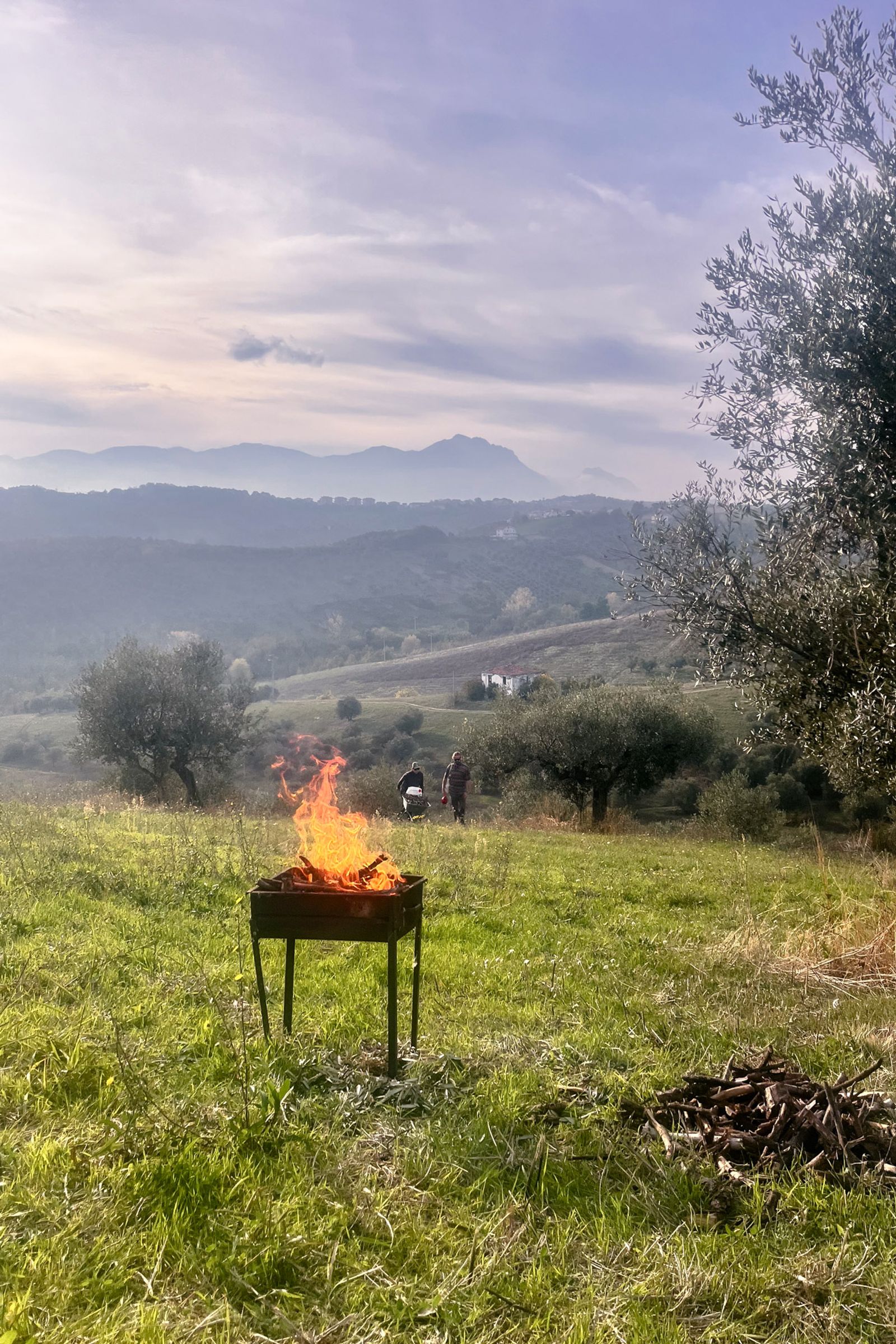
The past weeks had been spent at shoulder height — hands moving carefully through vines, lifting crates, negotiating ripeness. The olive harvest is different. Everything is heavier. Nets drag against the slope. Tools vibrate through your arms. The work pulls downward, not outward.
The first day hurt.
The second day, we could barely move.
We stood in the grove, wondering how we were going to get through three hundred trees like this.
By the fourth day, instead of bracing ourselves against the load, our bodies had adjusted.
There was no pause between seasons. As soon as the grapes were pressed, our attention had to shift. The vineyard had taken most of the year's focus, and we were underprepared. We had worked with olives before — once with experienced hands in Cilento, once helping an older man in the Castelli Romani who couldn't manage alone after breaking his foot.
Both experiences stayed with us.
Neither prepared us for doing it ourselves.
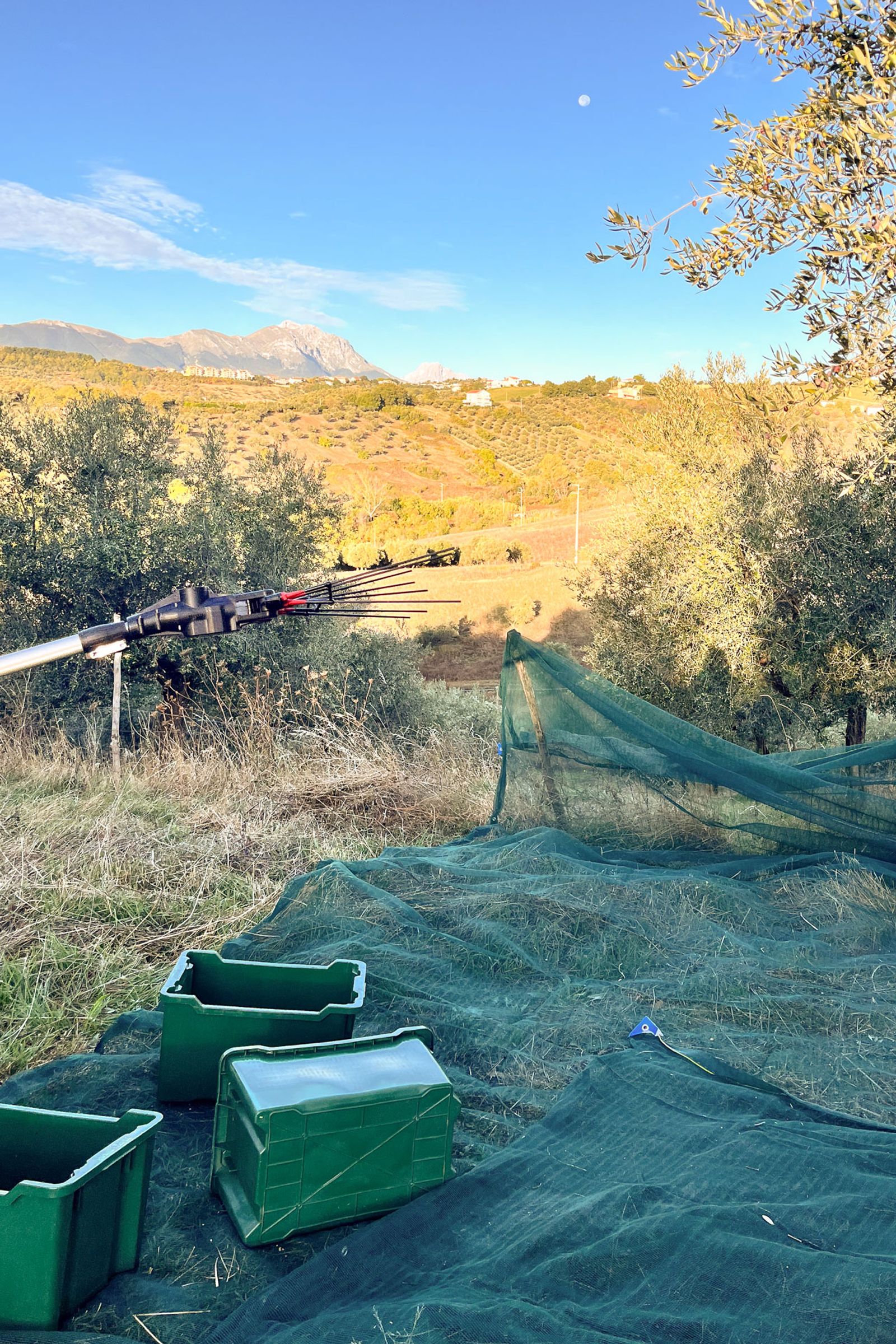
Money was tight after the grape harvest, so we decided to buy a single abbacchiatore (olive harvester), a couple of nets, and get started.
Time was against us. The olive fruit fly was in the area. We monitored it closely — aware of its presence, but not yet at the point of threatening the harvest. Still, fear spreads quickly. Nearby, people began harvesting weeks earlier. We couldn't. We were still elbows deep in grapes.
A strong windstorm passed through just before we began, knocking off many of the most affected olives. We lost yield, but what remained was healthier. Not a solution — just a kind of natural selection.
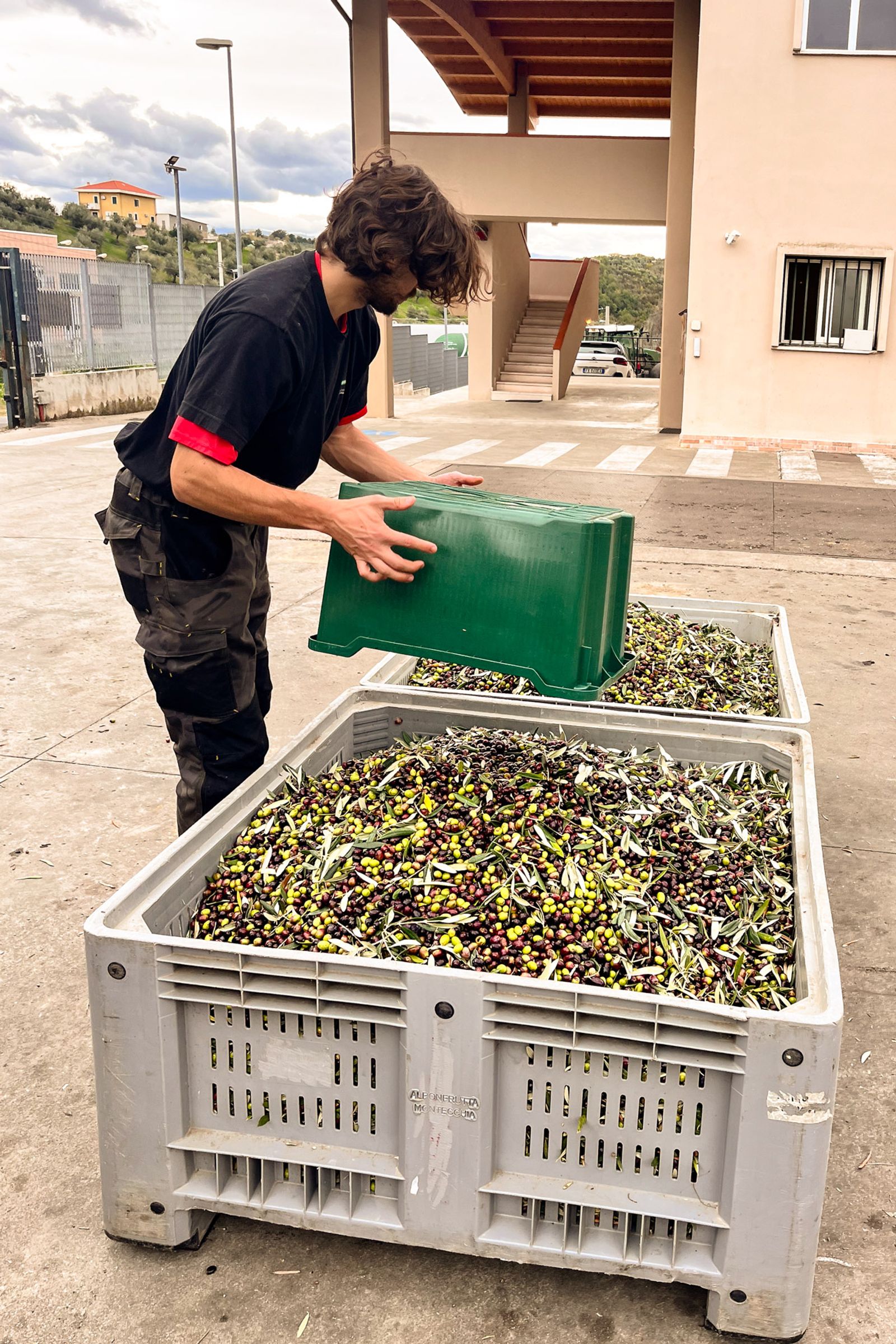
At the end of the first day, we took the olives to the frantoio (oil mill). The next day, the oil was ready. The acidity readings — measured as free oleic acid — came back well below the extra virgin threshold. Quiet confirmation. The flavour was alive: peppery, green, vibrant. That first oil mattered. It gave us confidence. It also gave us a bit of cash to buy more nets and keep going.
We worked with teams ranging from two to six people, eventually settling into a rhythm: three in the morning, three in the afternoon. Olive harvesting isn't a sprint. It's endurance.
After a few days, everything became olives. You wake up and head straight to the field. It's dark again by the time you return from the frantoio. When you close your eyes at night, you see olives falling toward you — again and again. Your clothes take on a smell that doesn't wash out. A fine mist of oil settles on your skin, waking it up. It's easy to understand why people have used olive oil on their bodies for thousands of years.
The work changes your posture. Arms raised for hours, shoulders opening, spine lengthening. By the end of the week, your body moves differently — looser, slower. You start to recognise the trees in your own movements.
We harvested an average of around thirteen kilograms per tree. At roughly a sixteen per cent yield, that's just over two litres of oil per tree. Once you've worked for it, your appreciation of the value changes. We cannot view olive oil as a commodity.
In total, the harvest took around two hundred and twenty human hours spread over ten days. As we moved through the grove, differences became obvious. Trees higher on the hill behaved differently from those in the valley. Some zones ripened faster. Others lagged behind.
The grove was not uniform.
The oil wasn't either.
Because we pressed daily, each batch came out slightly different — yield, acidity, flavour. The oil with the "best" numbers appeared near the end, not the beginning. Numbers, it turns out, don't tell the whole story.
Somewhere along the way, the distinction begins to blur. You stop thinking about harvesting the trees and start responding to them. The gestures repeat. Hands brushing branches. Fingers combing leaves. The same paths, day after day.
By the end, it no longer feels like work imposed on the grove. It feels more like grooming — weeks spent gently running your hands through the same crowns, learning their shapes, their patience.
When the harvest ended, it was difficult to stop.
The trees slipped into rest almost immediately, but our bodies didn't know how to follow. We invented small tasks — cleaning nets, rearranging tools — just to stay inside the rhythm a little longer.
There was a quiet sadness in letting the grove go. Weeks of daily contact ended all at once. The branches we had touched so carefully were now closed to us, preparing for winter.
The crash came later. When it did, it was total.
Most of the time, you have less control than you think. You do your best to stay attentive, to respond, to act when the moment arrives. Sometimes, if you stay long enough, the work changes you before you can name it. And then it's over.
It wasn't really over, though.
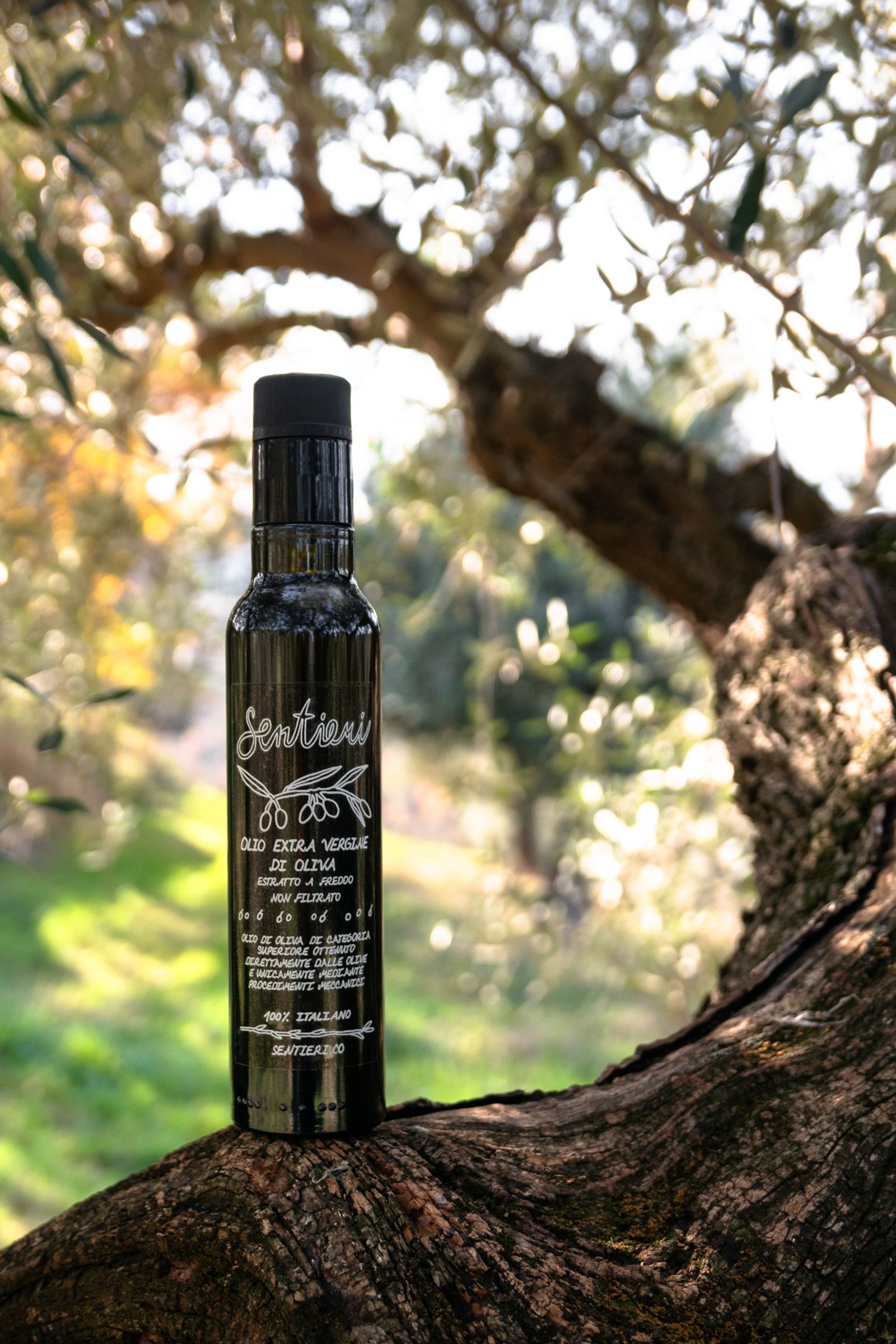
The house slowly filled with bottles of oil, carrying the weeks we had spent in the grove. Each time we pour it, we are transported back under the olive trees scattered along the hill. From there, the oil begins to move outward — to be shared and used as part of a new daily ritual by the people around us.