Harvest is often spoken about as a date on a calendar.
In reality, it is a negotiation — between time, weather, plants, people, and limits.
This year was our first.
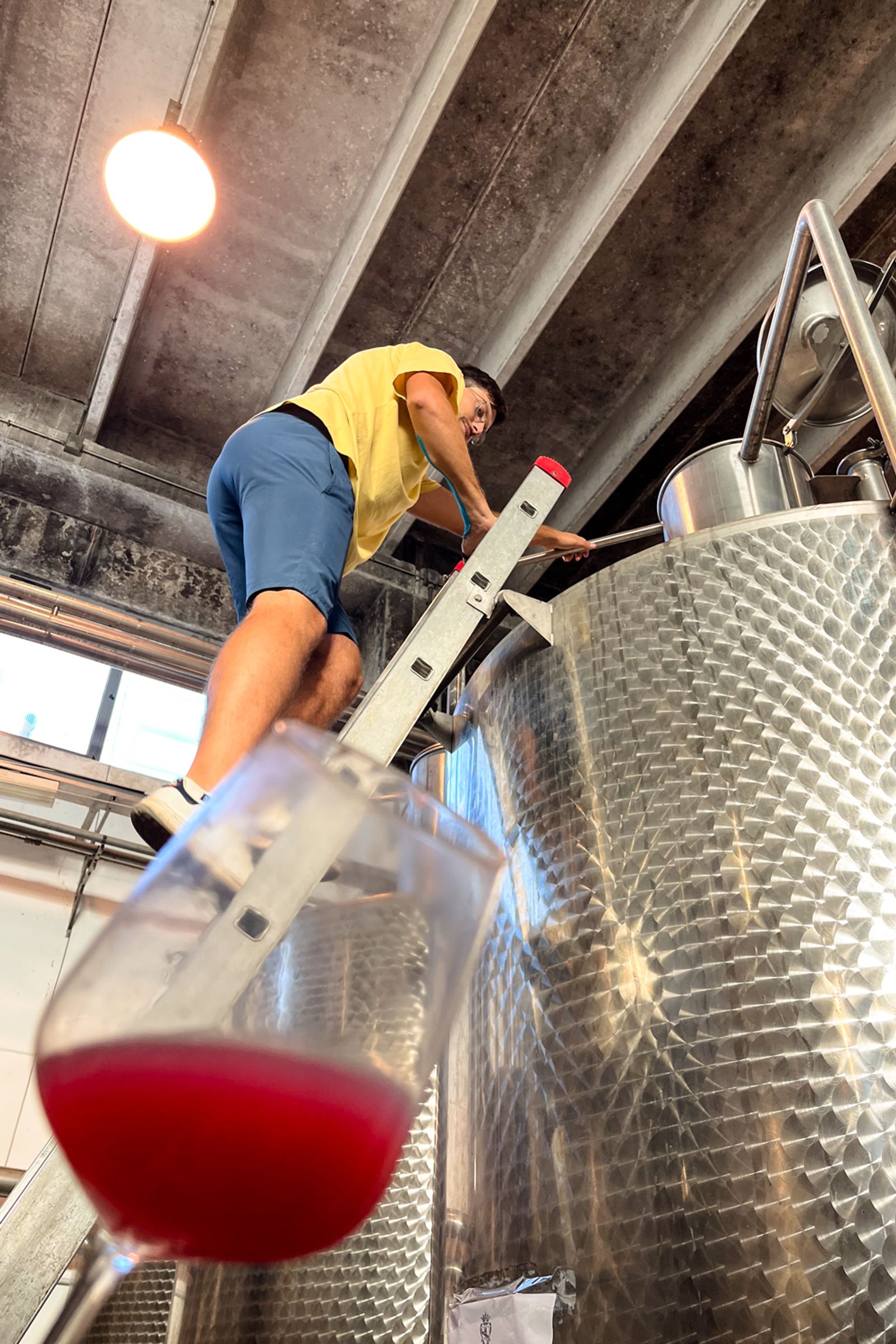
We had one hard constraint from the start: the tank. To fill the serbatoio, we needed enough grapes within a tight window. That meant people. It meant coordination. It meant accepting that the harvest would move at its own pace, not ours. When all of the elements came together, we had to act.
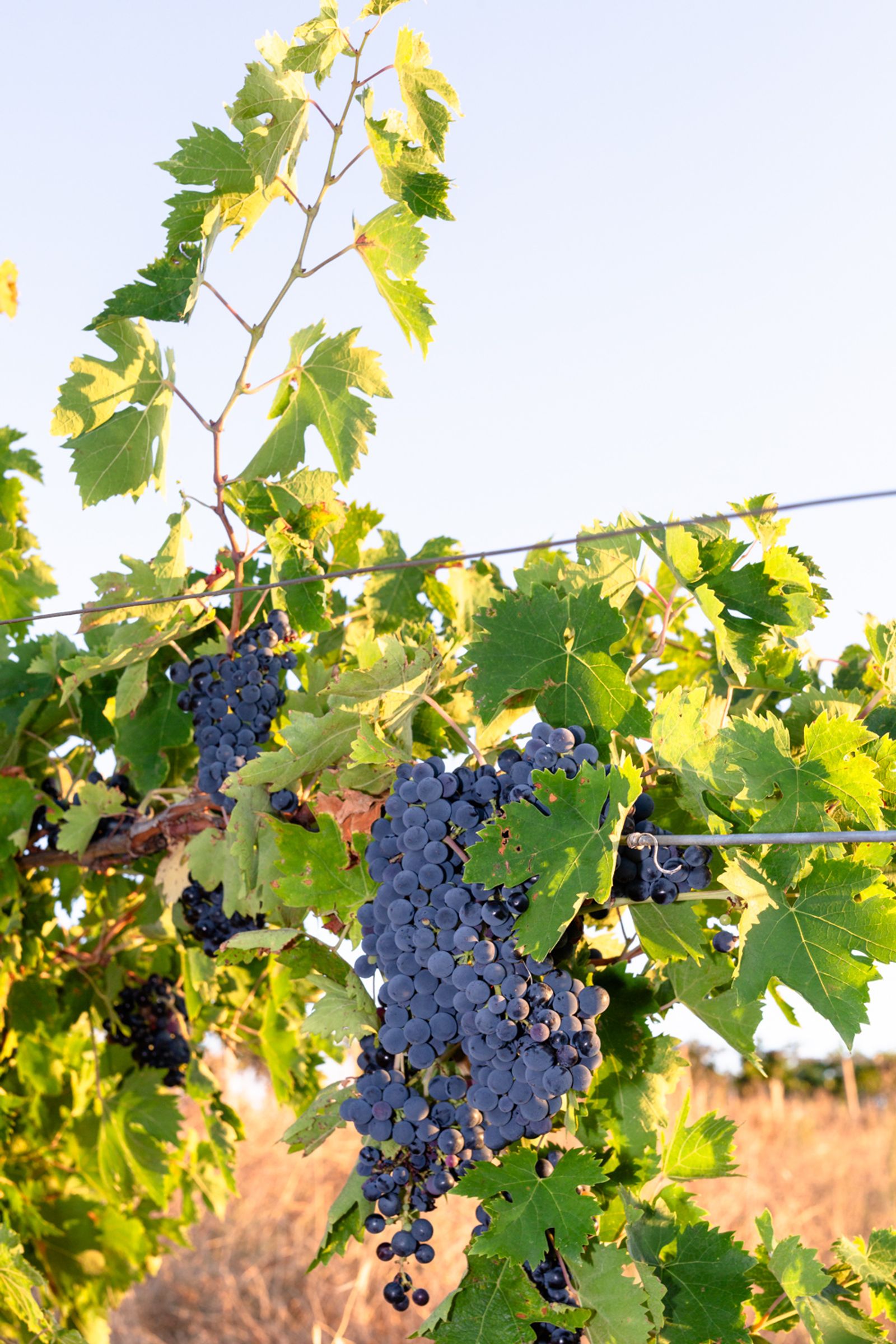
We were harvesting Montepulciano — the grape that has shaped this part of Abruzzo for generations — but in that moment, the variety mattered less than its condition and the people around it.
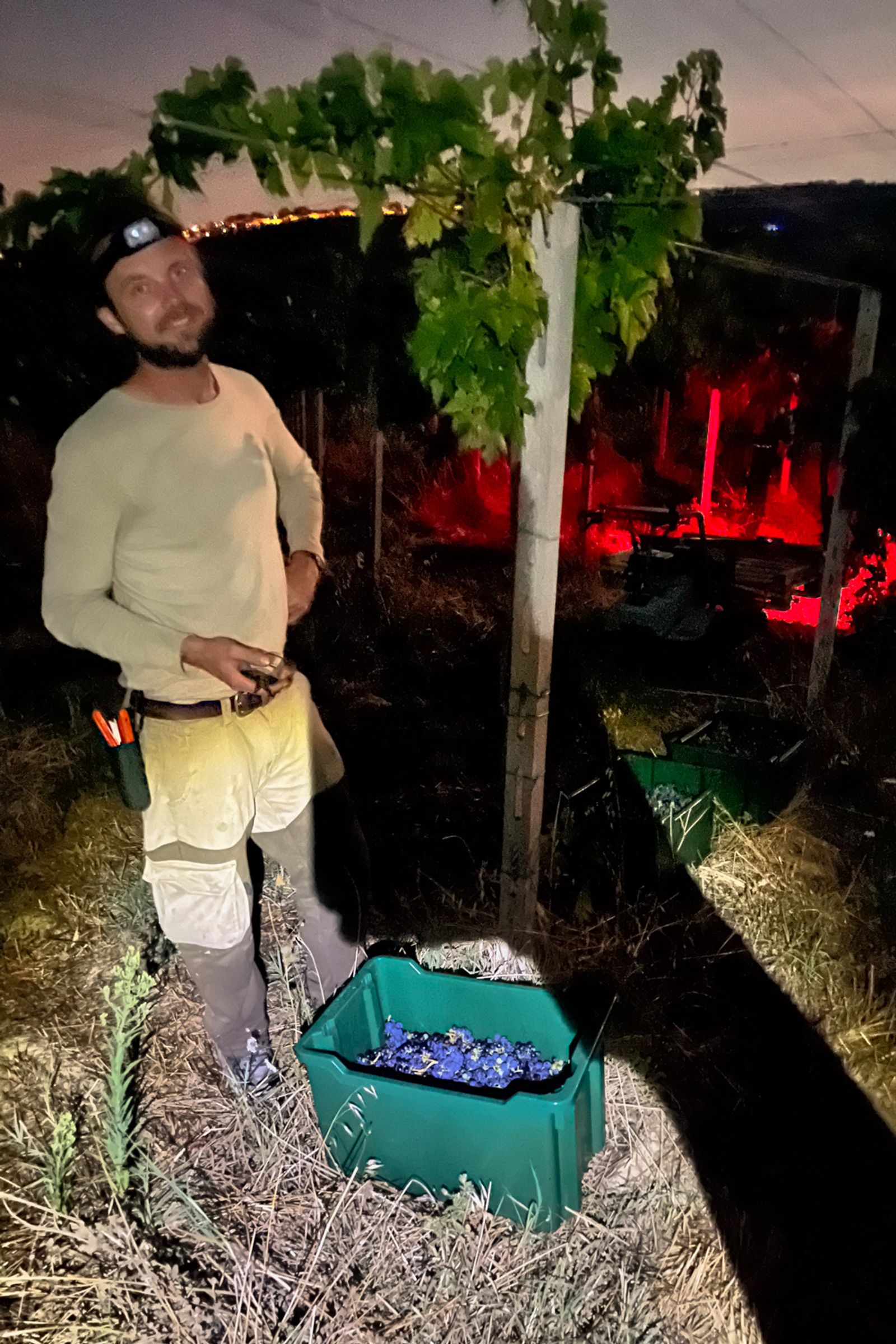
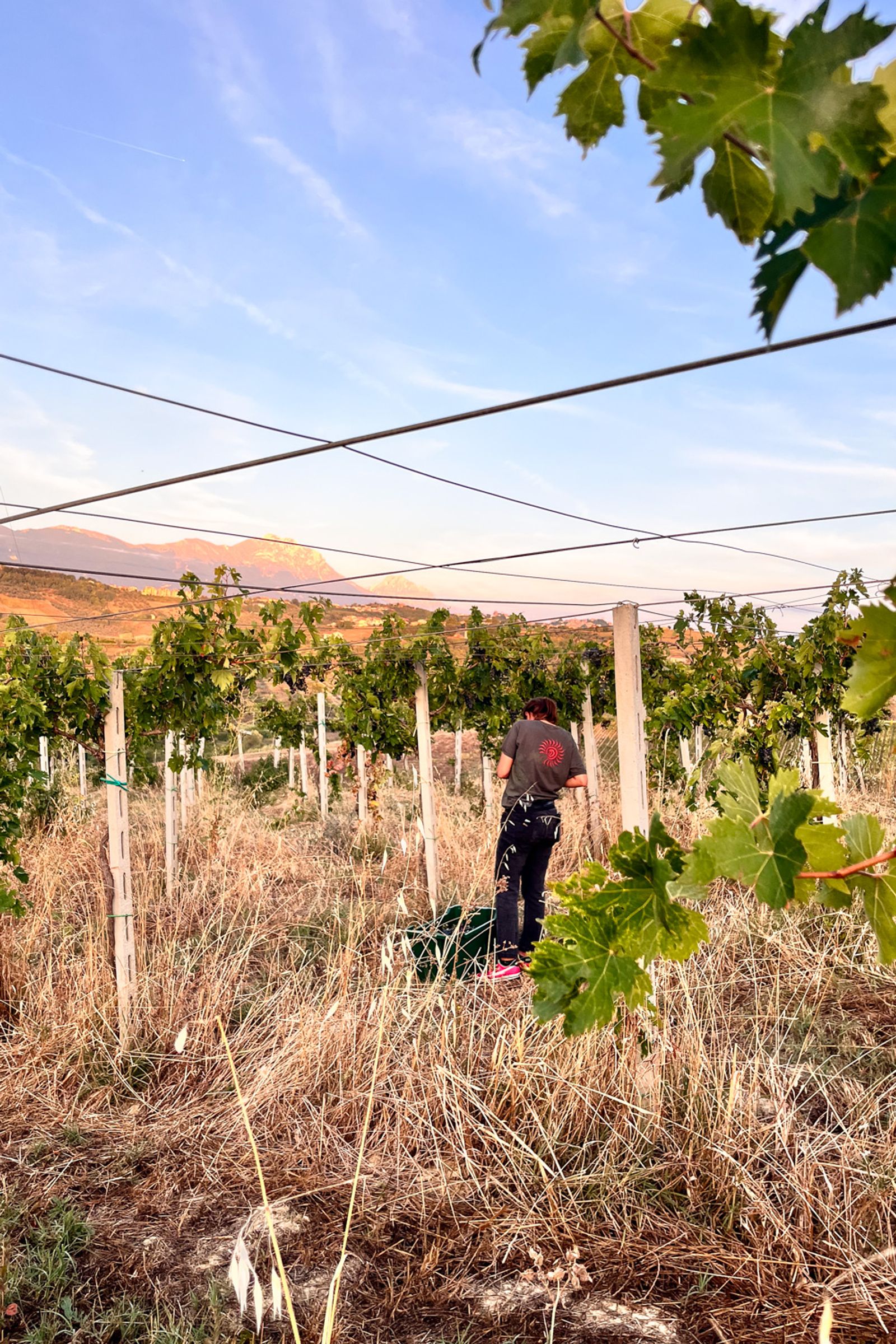
For the Rosato, we chose to harvest at night. The days were still brutally hot, and it felt more honest to work with the temperature rather than against it. Fifteen of us gathered in the vineyard in the late afternoon. By 2am, fatigue had thinned the group to six. We kept going until dawn.
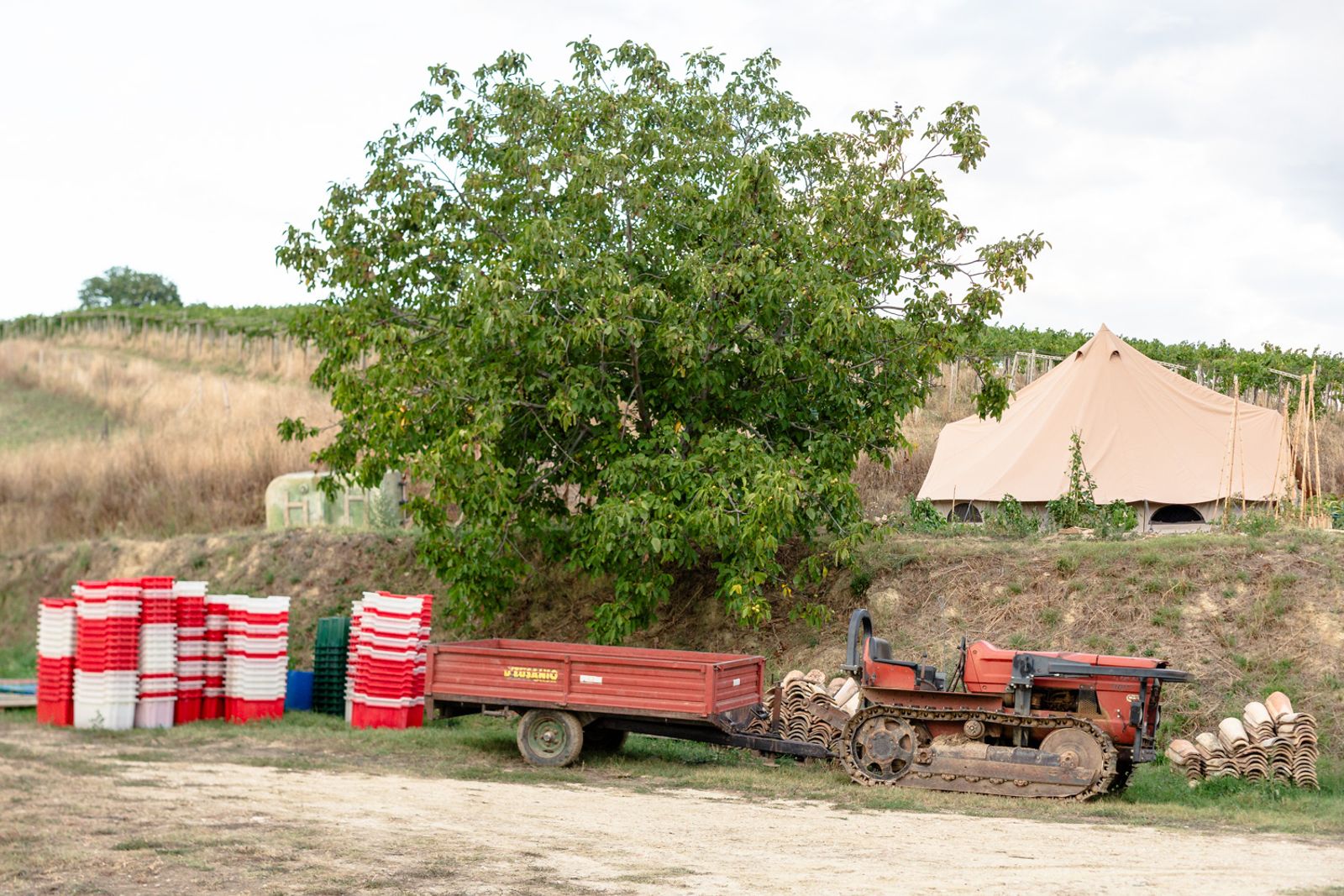
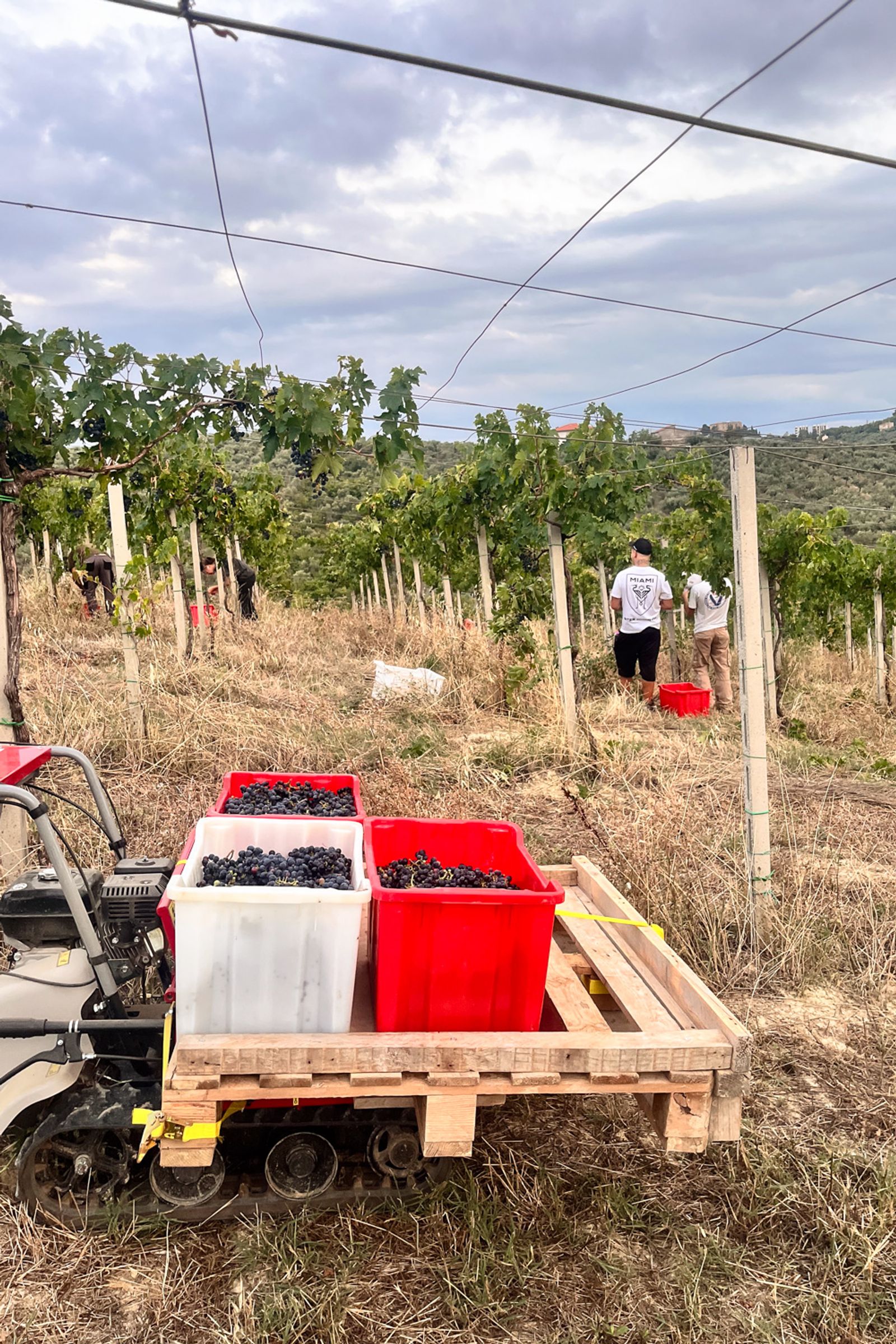
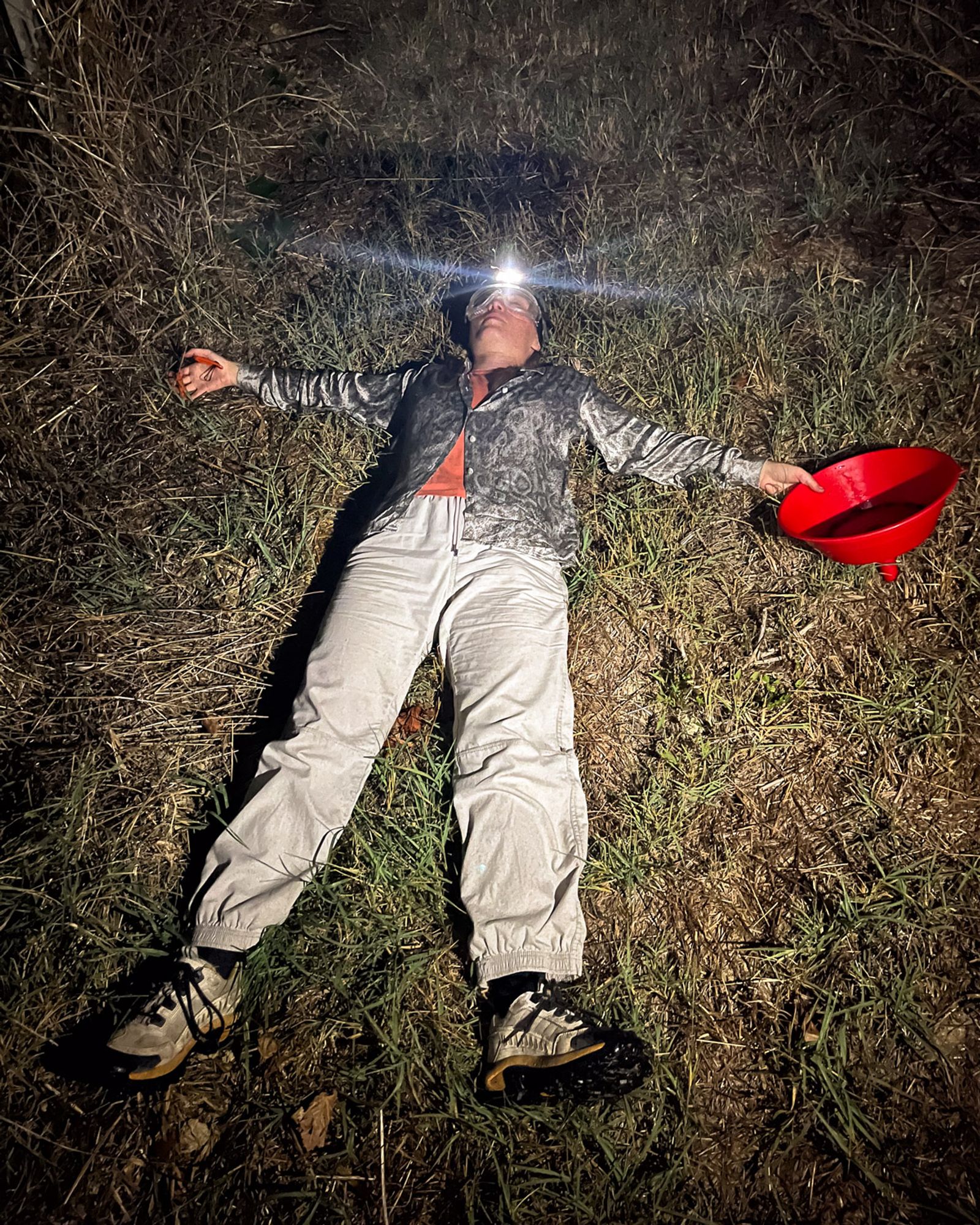
Head torches and bike lights marked where crates should be left. Grapes moved through the field on a customised motocarriola we had built the week before — aptly named the Frankenwagon. My brother carried a boom box, blasting hard-hitting Bristol beats. At times, returning to the vines after unloading crates felt less like farming and more like walking back into a forest rave at 3am.
The sun coming up over the mountains also felt strangely similar to a morning after a night dancing in the woods — body destroyed, ears ringing, clothes soaked, mind strangely clear. There's a story that harvesting under a full (in our case, super) moon gives grapes higher energy. We don't know if that's true. But the energy of that night was unmistakable.
We started at 15:00.
We finished picking at 08:00.
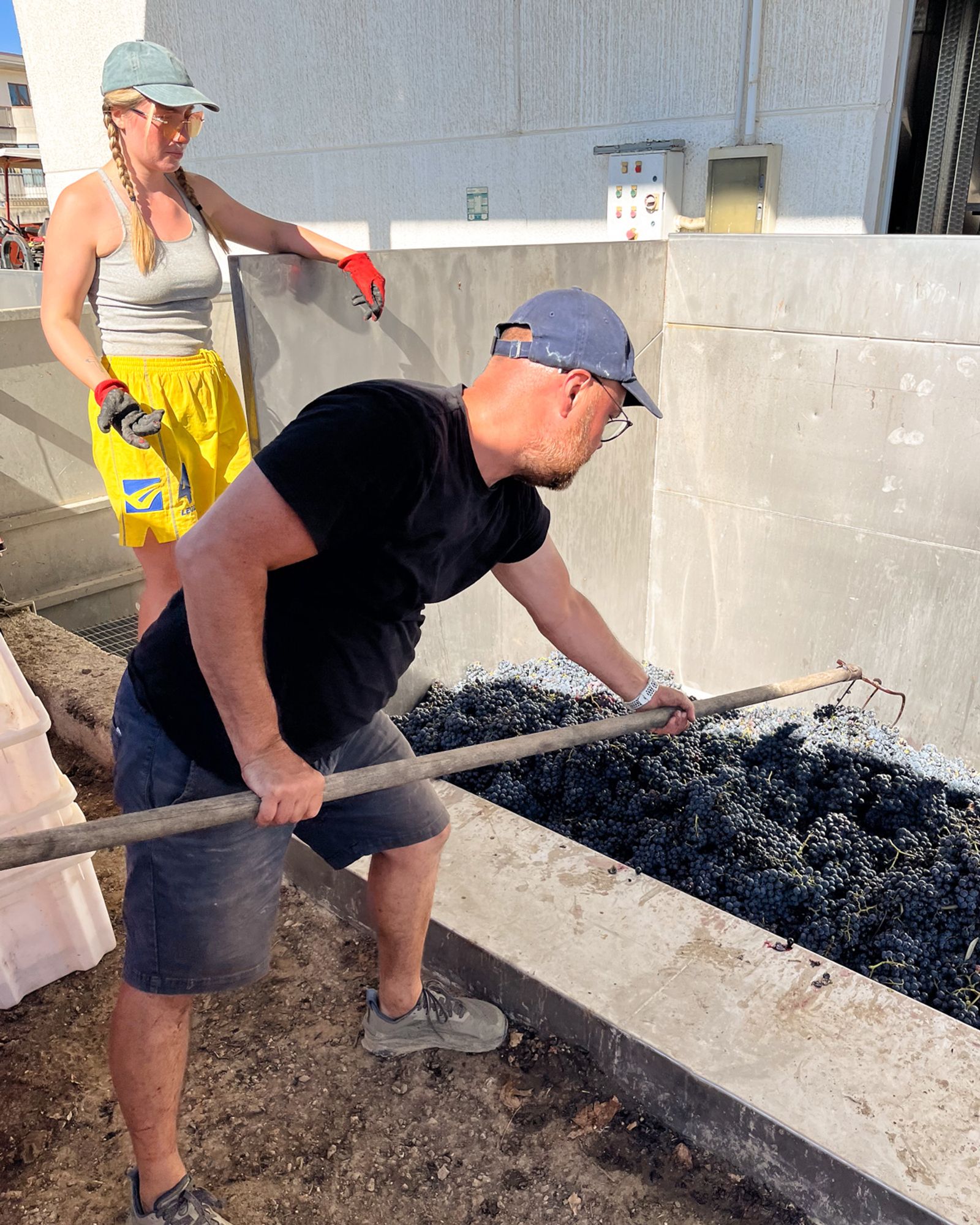
By 14:00 the next day, after pressing at the cantina, we were finally home.
Two weeks later, we harvested the Rosso.
This time we started at sunrise. It turned out to be a mistake. The heat softened the grapes quickly. Wasps and hornets gathered around the sticky juice. Filled crates had to be hidden under trees to keep them from overheating. The vineyard that day was steep, and exhaustion arrived early. It was a battle on all fronts.
The group was less cohesive. Some people were brilliant — pure energy — others seemed unsure why they were there at all. Probably the heat.
By nightfall, we were still short.
An older man helping us with the tractor gave a short, almost comical motivational speech and sent the remaining four of us back into the vineyard. It was a new moon. No extra light. By then, the grapevine moth had arrived, its red eyes reflecting back at us through our headlamps. It felt vaguely apocalyptic.
We picked for another five hours, hunting for the remaining clusters. By the end, we were annihilated. A few hours later, we were back up to load the truck and then headed for the cantina.
And then something shifted.
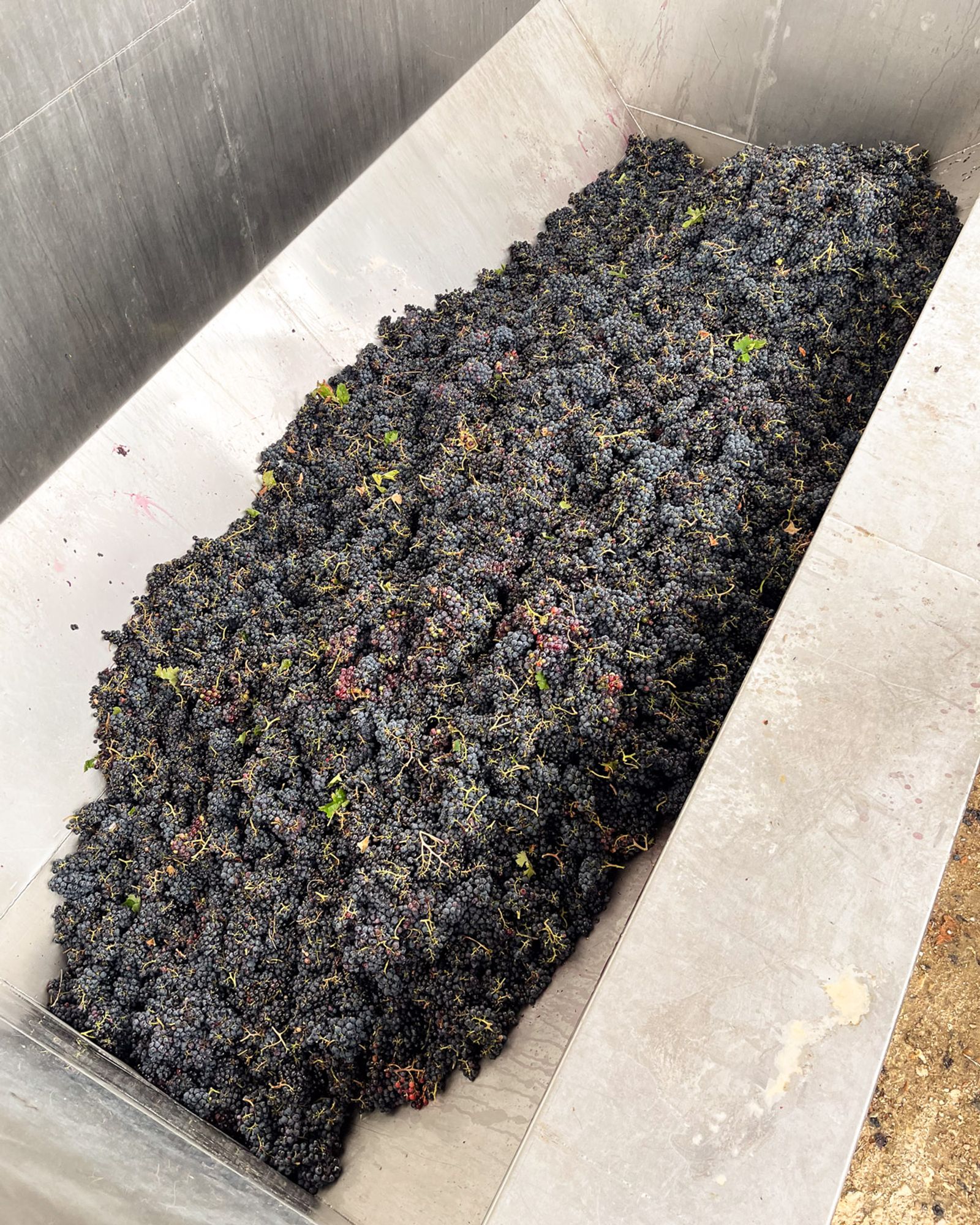
Seeing all the grapes together in the press was surreal. People at the cantina commented on their health — clean, intact, vibrant. We had been extremely selective, leaving anything questionable on the ground to return to the soil. The must was beautiful.
The contrast was sharp. The week before, we had helped harvest another vineyard. Many grapes were affected by fungal disease. Being covered in that juice felt dirty, almost wrong. With ours, we were eating grapes straight from the vine, fingers sticky, laughing. We felt safe doing so because we knew exactly how the vineyard had been treated throughout the year — what had been used, what hadn't, and how closely we had been present with the vines at every stage.
That difference stayed with us.
Many vineyards around the world have to warn visitors not to touch anything because it's toxic. That logic feels broken. If you wouldn't touch it, why would you drink it?
Hand harvesting made all of this visible. It allowed friends and family to participate. It forced attention. It revealed health not as a metric, but as something you can smell, taste, and trust.
In a few months, we'll bottle around 10,000 bottles of wine. But the harvest itself — those two intense negotiations with time and limits — is already shared. The bottles are simply another way of carrying that experience forward.